Quantum Game Theory: Transforming Nash Equilibrium Through Superposition, Entanglement, and Interference
Quantum Game Theory: Transforming Nash Equilibrium Through Superposition, Entanglement, and Interference


In classical game theory, players are limited to deterministic strategies or probabilistic mixed strategies. Quantum game theory introduces quantum mechanical principles—superposition and entanglement—fundamentally altering game structures and redefining Nash equilibria.
:max_bytes(150000):strip_icc()/prisoners-dilemma-ddda32e435f14fc6b584caaa8723bbeb.jpg)
1. Expansion of Strategy Space: From Probabilities to Wave Functions

Classical strategies are discrete (e.g., "cooperate" or "defect"), with mixed strategies distributing probabilities p and 1-p. In quantum game theory, strategies become quantum state vectors in Hilbert space. Qubits enable infinite superposition states, transforming the strategy space from a line segment into the surface of the Bloch sphere. This introduces intermediate states inaccessible in classical games, yielding novel equilibrium points.

2. Resolving the Prisoner's Dilemma: The Power of Entanglement
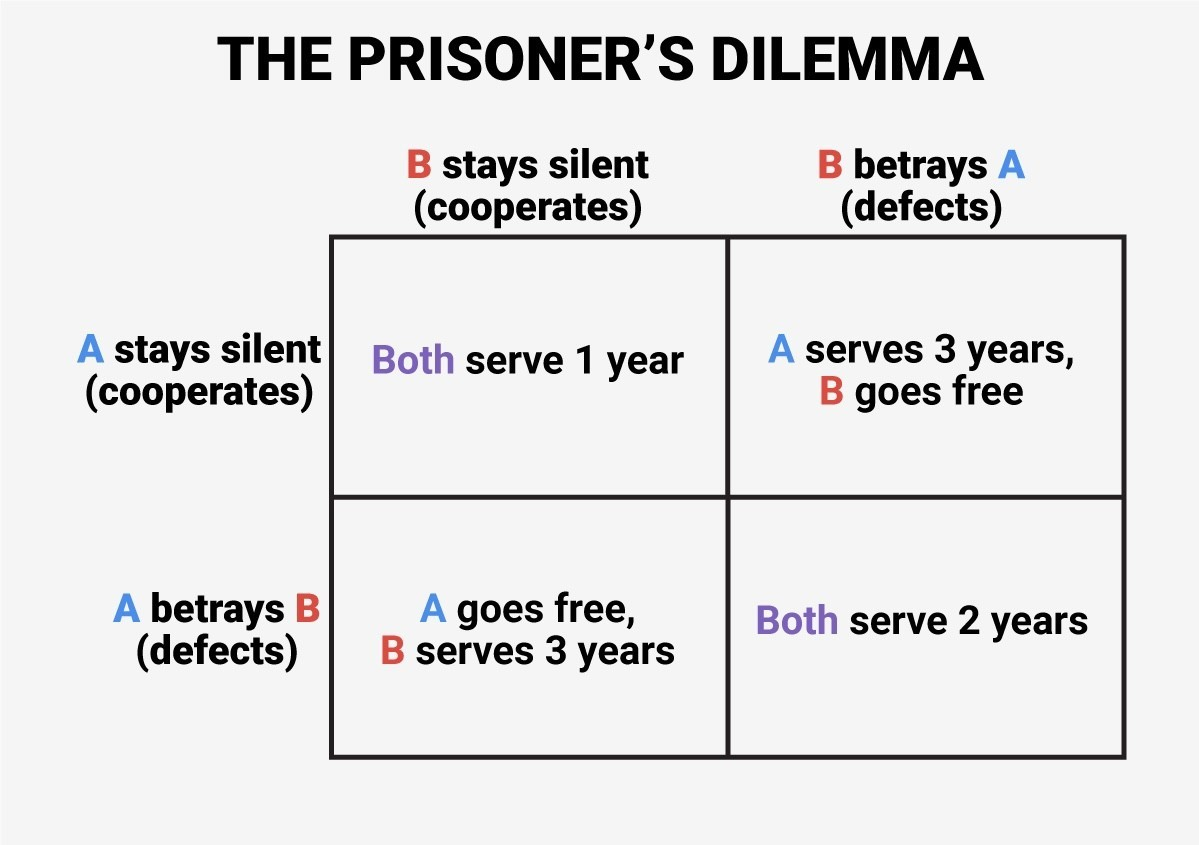
Eisert et al. (1999) demonstrated a seminal application. In the classical Prisoner's Dilemma, mutual defection is the sole Nash equilibrium, despite mutual cooperation yielding superior payoffs.
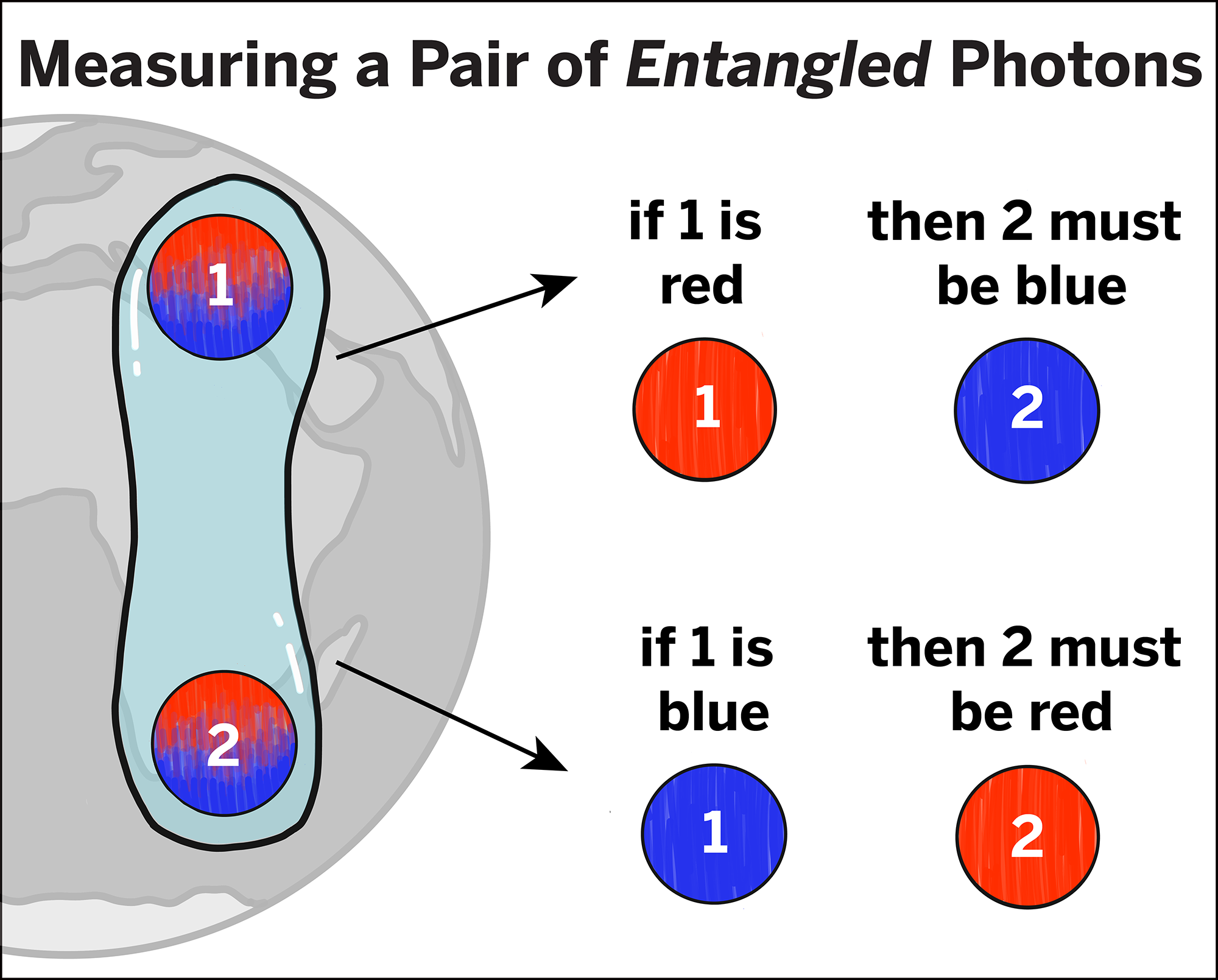
When strategies are entangled, players apply quantum operators (e.g., the Q operator) to their qubits. A new quantum Nash equilibrium emerges, enabling payoffs approaching mutual cooperation. Unilateral deviation yields no advantage. Entanglement eliminates the incentive to defect undetected, fostering cooperative outcomes.

3. The Hadouken Analogy: Understanding Quantum Interference
The "Wave Motion Fist" (Hadouken) from Street Fighter aptly illustrates interference—the most profound concept in quantum game theory.
- Superposition (Charging the Move): Strategies exist in a wave-like state of "both A and B" until measurement.
- Phase Interference: Constructive interference amplifies cooperative outcomes; destructive interference cancels defection probabilities.
- Transcending Classical Collisions: Energy waves penetrate barriers, shifting equilibria toward mutually beneficial positions unattainable in rigid classical frameworks.
In this analogy, players adjust "phase and frequency" to produce outcomes where 1 + 1 > 2.
Quantum Approaches to Nuclear Deterrence: Beyond Mutual Assured Destruction (MAD)
Classical nuclear deterrence relies on a fragile "terror balance." Quantum game theory offers pathways to transcend this via wave-cancellation and entanglement.
:max_bytes(150000):strip_icc()/GettyImages-614739604-5a8449b9ae9ab8003764cb63.jpg)
Wave-Cancellation Deterrence: An "attack intention wave" ψ_attack is met with a phase-opposite ψ_peace, resulting in destructive interference (ψ_attack + ψ_peace = 0). War probabilities are nullified before collapse into observable reality.

Entanglement binds decision chains such that attacking the other equates to self-harm. Strategic ambiguity maintains superposition, rendering disruptive actions self-canceling.
Challenges include decoherence and noise, which collapse quantum states into classical ones. Robust strategies involve hybrid quantum-classical models, error correction, and controlled noise for strategic ambiguity.
Political Lobbying as Classical "Interference"
Political public affairs demonstrate analogous manipulation of perceived realities:
- Amazon HQ2: A competitive bidding process maximized concessions through external pressure.
- Uber/Lyft Proposition 22: Direct voter appeals reframed regulation as a threat to consumer choice.
- Tobacco Industry: Seeding doubt via "scientific uncertainty" delayed regulation for decades.
These cases succeed by aligning interests constructively rather than confronting opposition directly.
Philosophical Implications: Physical Peace vs. Human Agency
Quantum-enforced peace offers structural stability, rendering conflict physically improbable rather than merely deterred by fear. However, it raises concerns about diminished free will, the loss of heroic narratives, and the potential displacement of conflict into emotional or virtual domains.
A balanced approach—quantum frameworks providing an unbreakable floor of security, complemented by human public affairs for resource allocation and innovation—appears optimal. This preserves dynamism while safeguarding against existential risks.
In conclusion, quantum game theory illuminates pathways to superior equilibria by leveraging physical laws. Realizing such potential requires addressing decoherence through robust, noise-tolerant designs. Ultimately, the "wave motion fist" of quantum strategies may not eliminate human imperfection but could ensure that our imperfections no longer threaten collective survival.


コメント